
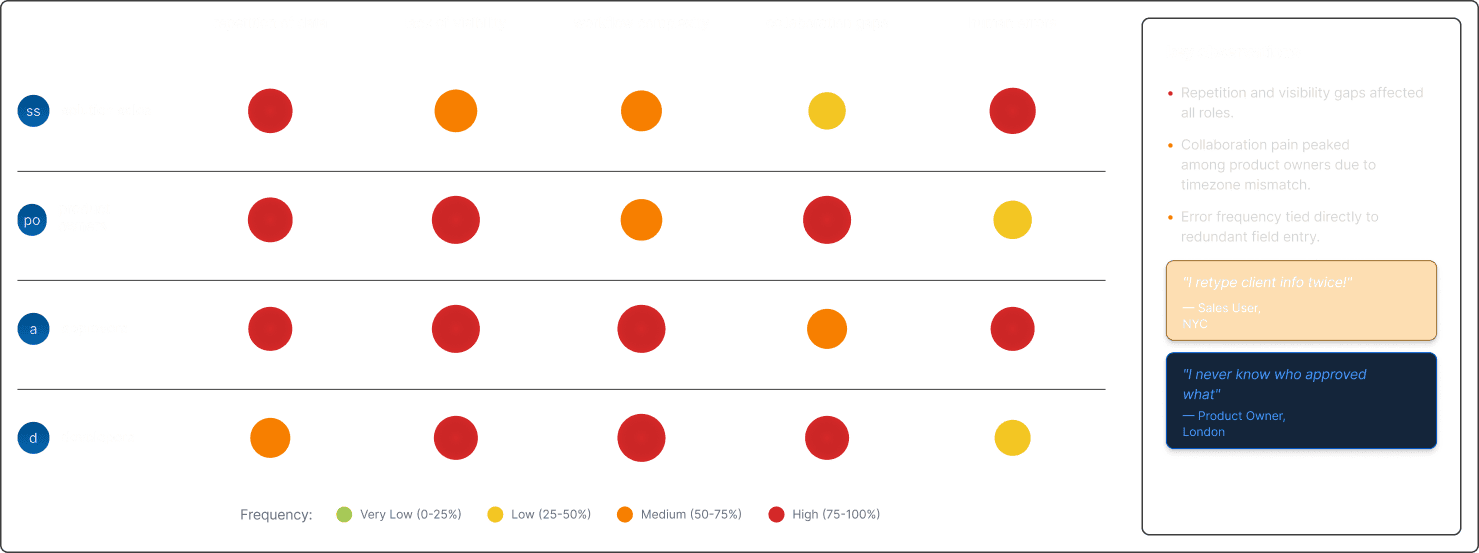
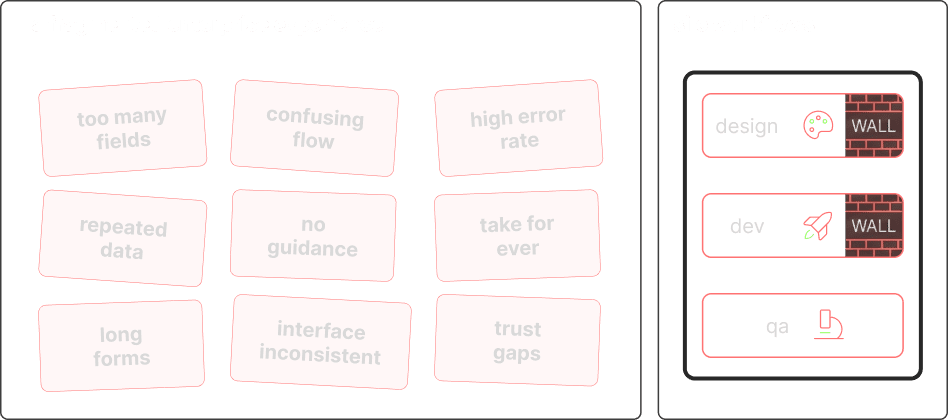
what users struggled with - across roles and regions
aggregated pain points from 3 regions, 4 user groups, and 22 interviews.
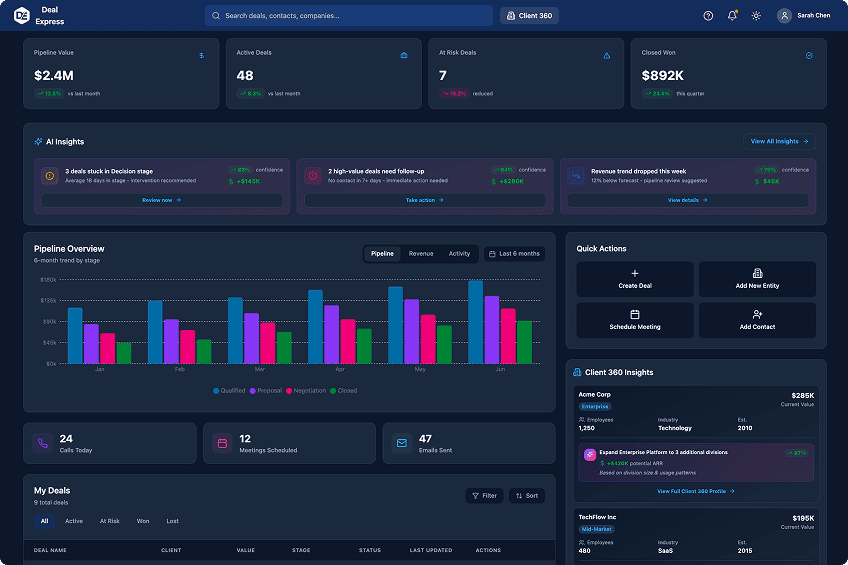
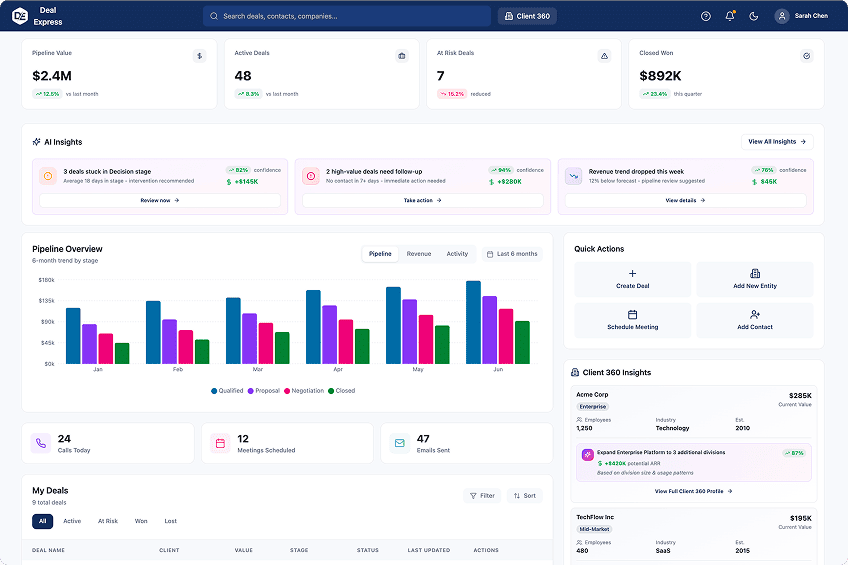
deal express is citi's global b2b crm: sales and product owners use it to take a prospect through every stage of the deal lifecycle, up-sell fintech services and hand the deal to the client portal, with teams working across london, new jersey, toronto, pune and chennai.
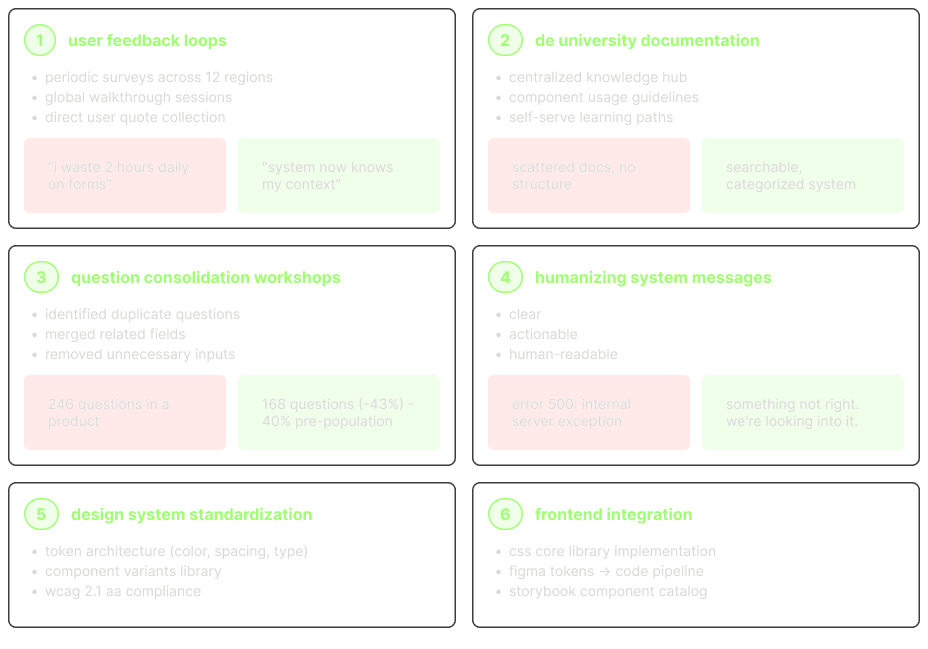
the legacy crm had serious usability problems: a simple deal update meant navigating several pages and widgets, and every product's deal form asked too many questions (246 per product), much of it information the system already held. the cognitive load caused data errors, and the errors caused a steady stream of support tickets. years of product-by-product additions had also left inconsistent flows across regions and a four-week front-end cycle for every new product.
lead ux architect, february 2018 to april 2024. i owned the ux architecture end to end: research, workflow redesign, the design-system foundations and the design-to-code workflow, and i mentored the account's ux/ui designers. i worked with sales users, approvers, product owners and the front-end teams inside citi's agile delivery.
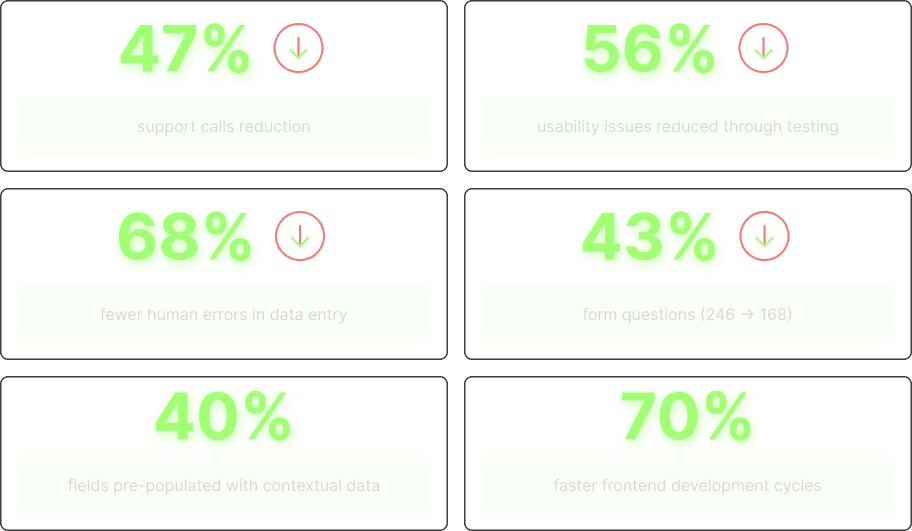
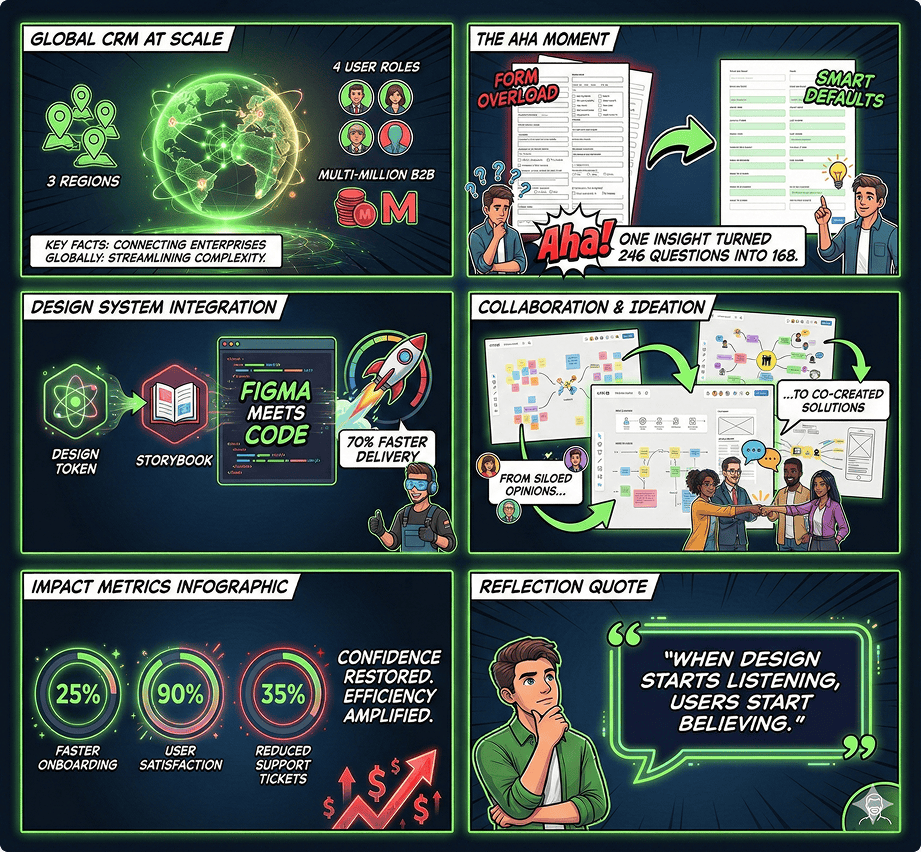
questions per product cut from 246 to 168. in testing after the redesign, 56% fewer usability issues, 68% fewer data-entry errors and 47% fewer support tickets; 40% of fields pre-populated; front-end build per product down from two weeks to four days; the crm's interface standards met wcag 2.1 aa.
measured in q4 2022 against the pre-redesign baseline, from the service-desk report and 8 usability sessions.
a global crm is an ecosystem, not a screen: aligning product owners across five time zones took as much design as the interface did. the thing i would do earlier next time is bring users into the room from the start; the research showed product owners had been speaking for users rather than with them.
citi's crm application is a multi-million-dollar b2b platform supporting global sales and product owners in converting prospects into profitable deals. the system enables up-selling fintech services, enriching deals through multiple sales-cycle stages before implementation and integration with the client portal.
however, over time, the tool had grown complex and inconsistent - slowing down deal progress and frustrating global users spread across multiple time zones.
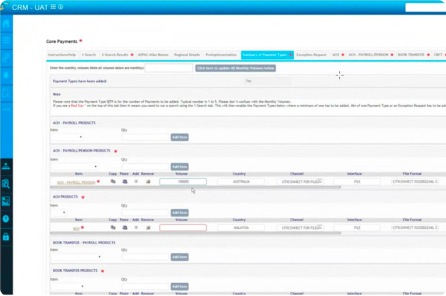
"even a simple deal update meant navigating between five screens… it felt like chasing your own tail."
my role as lead ux architect was to redefine the experience end-to-end - from research and workflow redesign to design-system integration and developer collaboration - within an agile environment spanning teams in london, new jersey, toronto, pune and chennai.
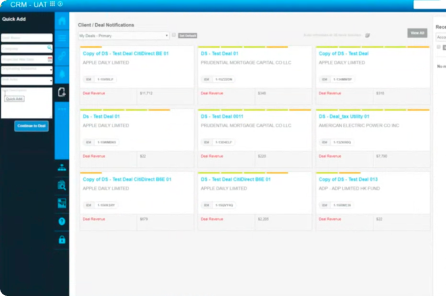
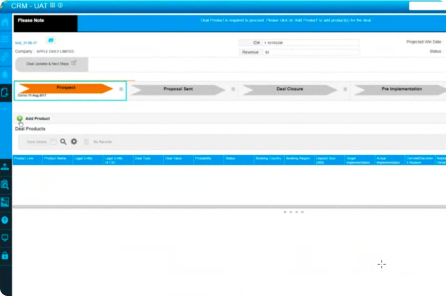
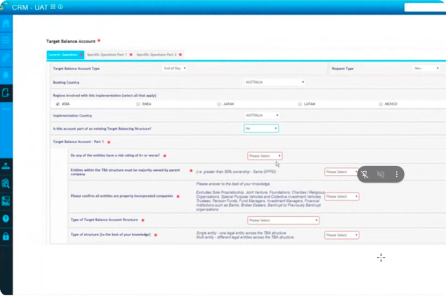
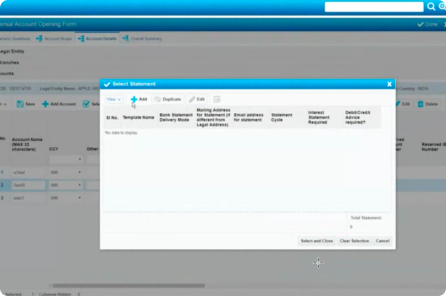
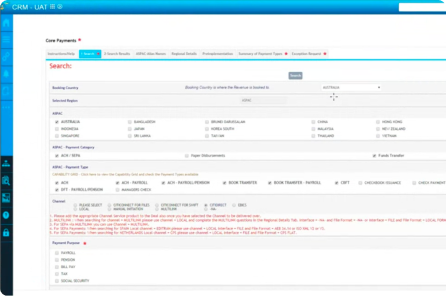
 screen 1 / 6
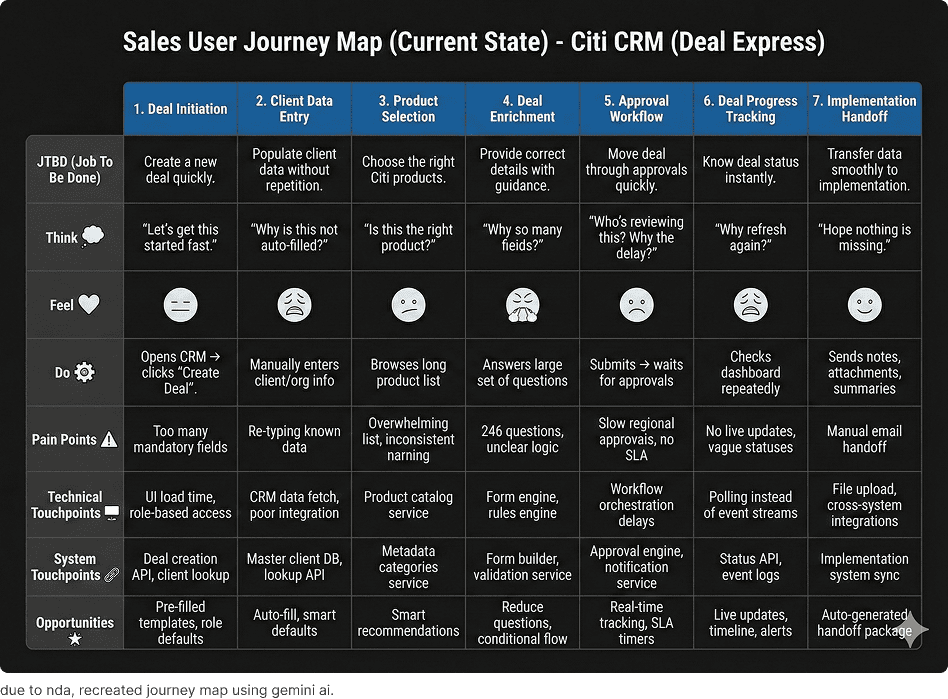
"what my research revealed - it wasn't the users failing the system, it was the system failing to remember."
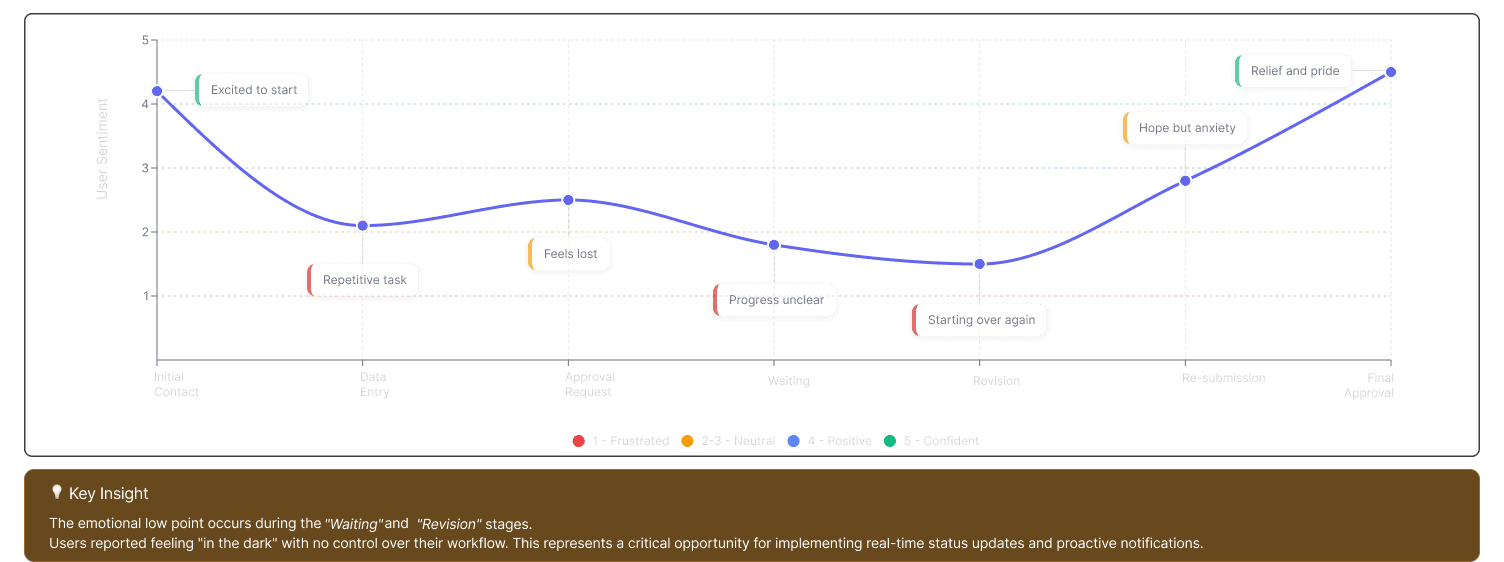
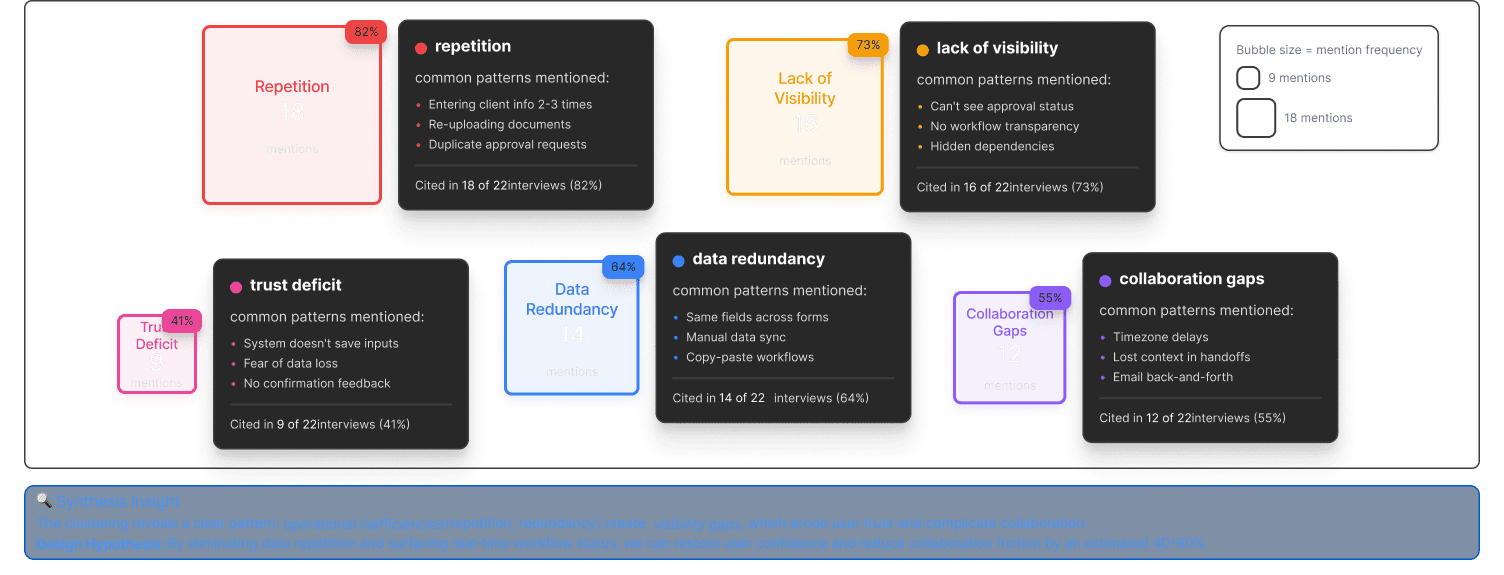
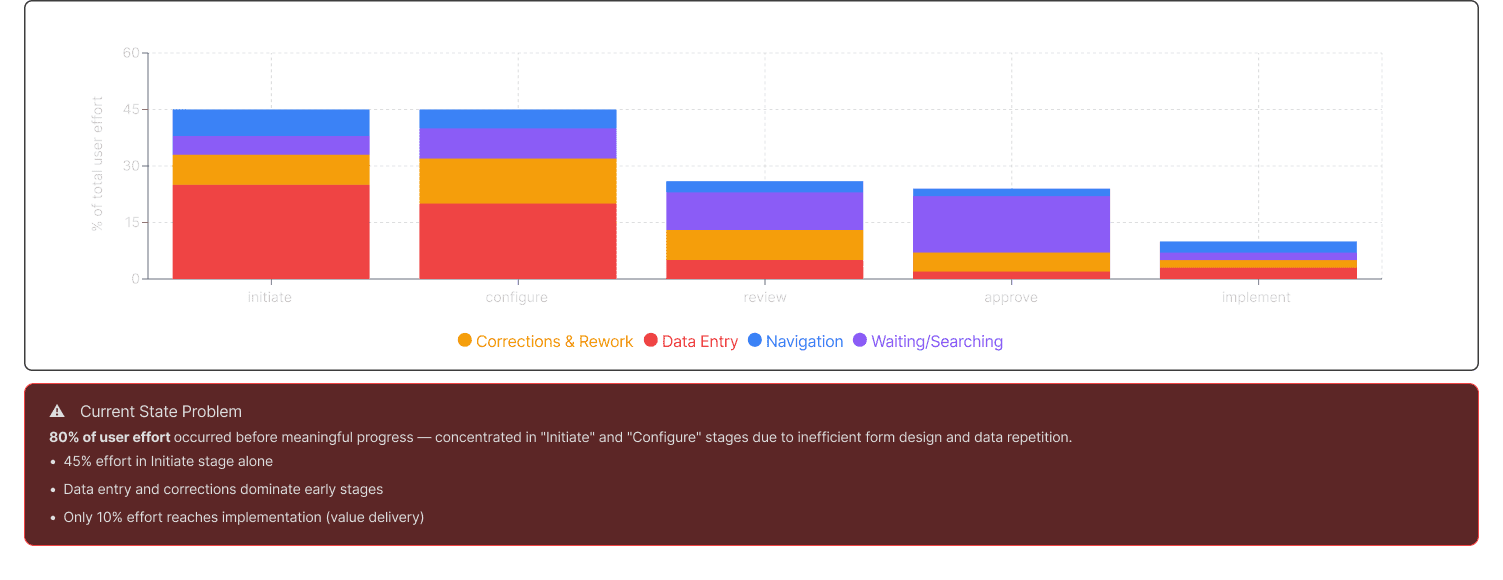

the crm had evolved over years of incremental updates - each product added its own flow, leading to inconsistent ux patterns and redundant data entry.

sales users spent more time feeding the system than selling. manual workflows and repetitive questions drained productivity and confidence.

global product owners spoke for users, not with them. regional differences in process and time zones made feedback fragmented and delayed.

heuristic evaluations uncovered long, unstructured forms with repetitive fields - forcing users to re-enter known information and increasing error rates.

the system failed to leverage existing client data or deal history - users couldn't benefit from pre-populated answers or smart defaults.

users felt unheard, and developers struggled to see the ux intent behind screens - revealing a clear need for design-system governance.
users couldn't track deal status easily. the lack of clear progress indicators led to uncertainty, repeated follow-ups, and support calls.

time zone gaps among product owners caused decisions to happen in isolation - resulting in inconsistent priorities and slower delivery cycles.

repetition and ambiguity were not usability issues - they were systemic communication problems.
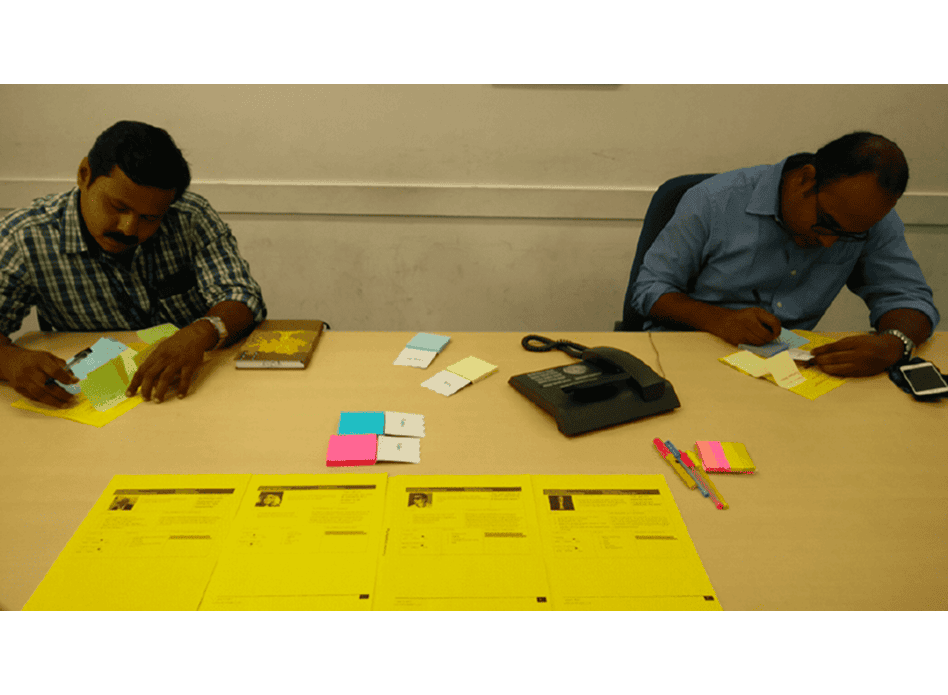
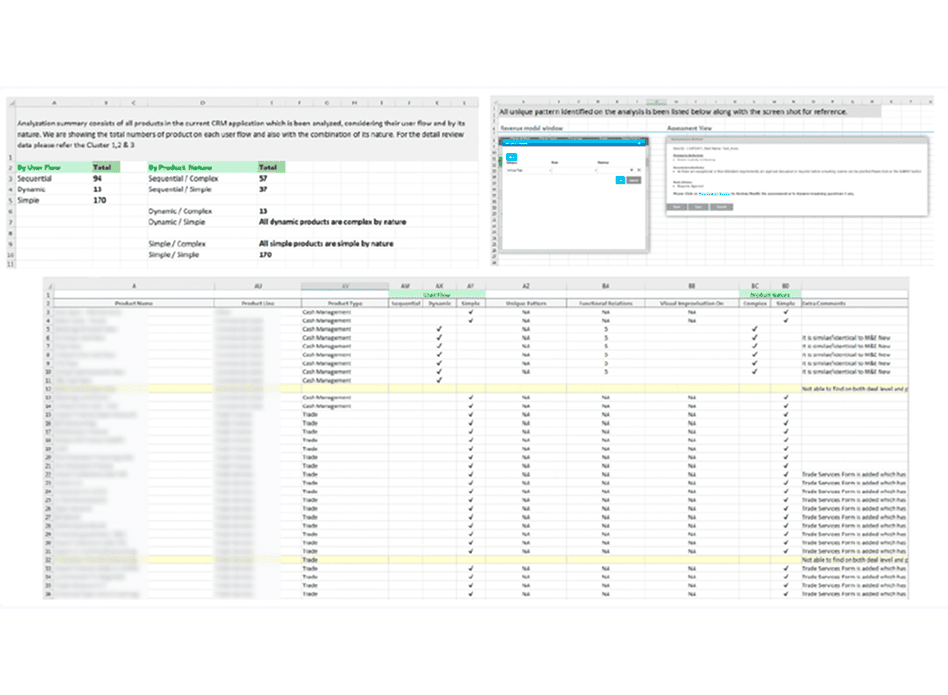
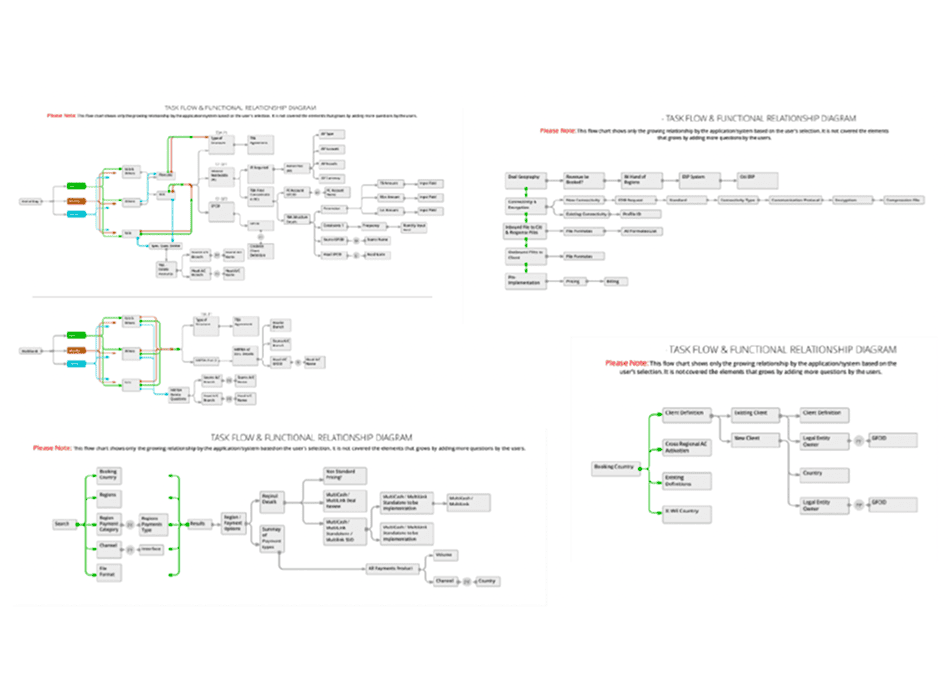
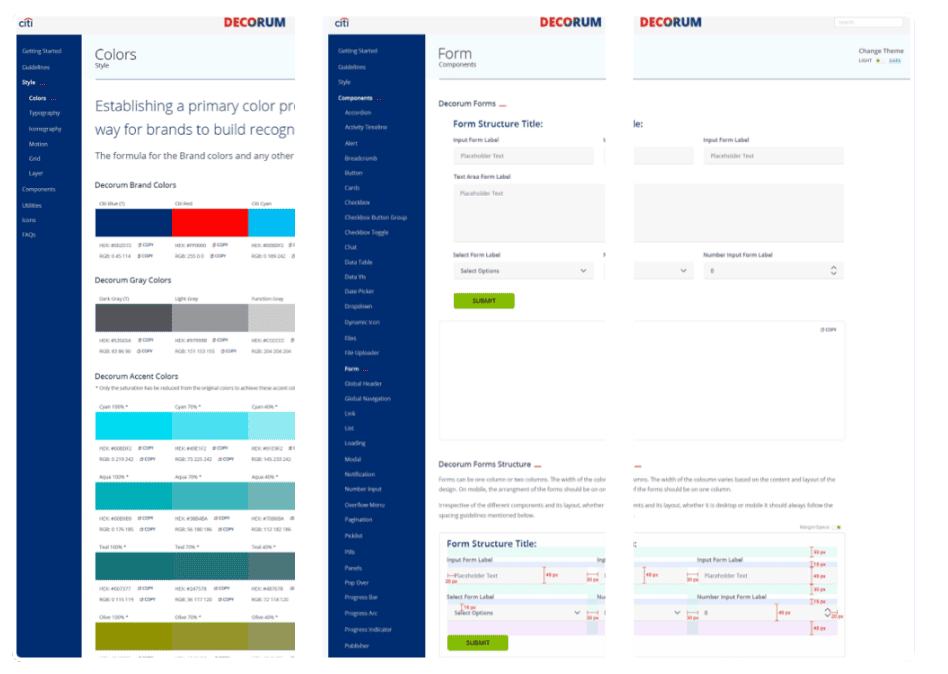
"unified design language across crm modules."
i established the core foundations of the design system - colour, typography, spacing, elevation, and interaction tokens - mapped directly to production code. these foundations created a single source of truth across all crm modules, enabling visual consistency, accessibility, and rapid ui assembly.
design system
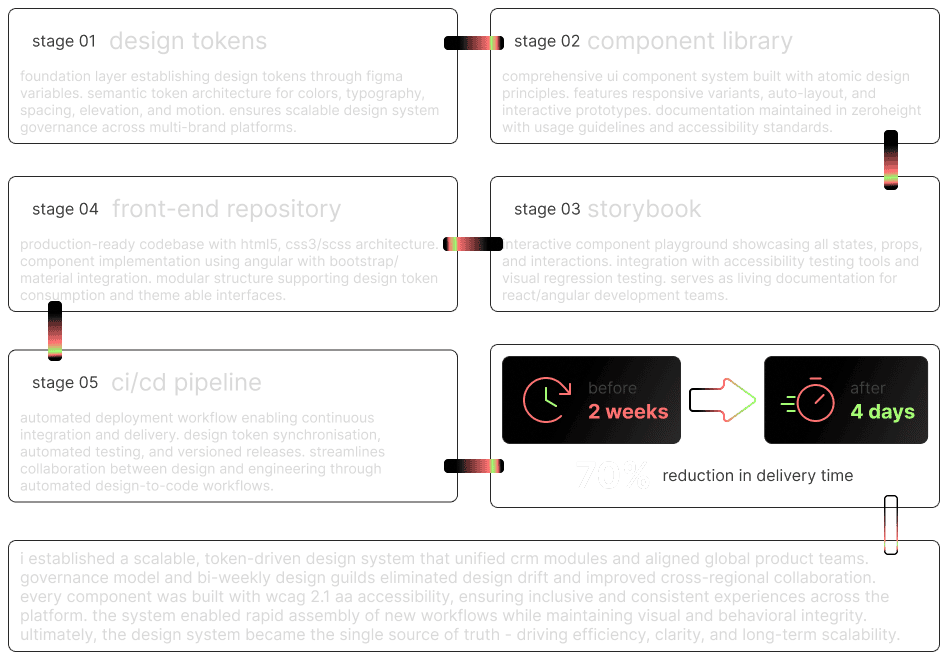
"introduced a variable-driven design-to-code workflow with reusable components, layout templates and ci/cd pipelines."
frontend teams reduced build time from 2 weeks to 4 days using reusable templates.
"a once-fragmented platform became a responsive, insight-driven system."
overview & take away
this project taught me how to scale ux strategy across a multi-region, multi-system financial ecosystem.
designing for a global financial ecosystem means understanding not just users, but their interconnected systems. this project taught me how to navigate multi-region workflows, align diverse stakeholders, decode complex data relationships, and translate them into clear, scalable design strategies. it remains one of the most challenging and rewarding engagements i've led.
it remains one of the most demanding and rewarding engagements of my career-where design, technology, governance, and human behaviour had to converge to create meaningful impact.