context
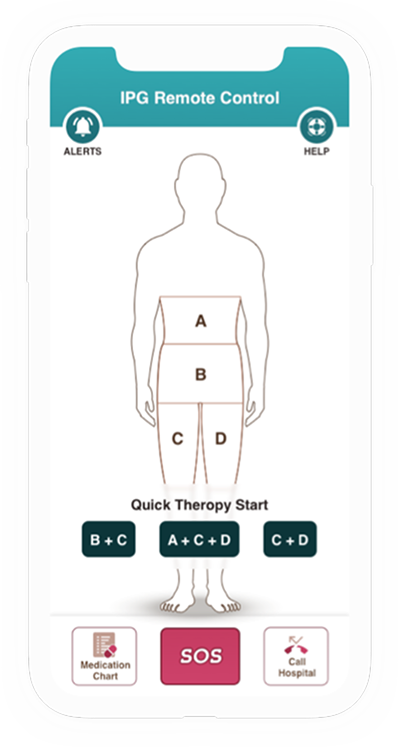
a speculative reimagining, in 2026, of a 2017 rfp concept for a medical device manufacturer: a companion app for patients managing chronic pain through an implantable pulse generator, with a caregiver view and a care team on the other end. the original problem, research constraints and clinical framing are kept; the interface, accessibility approach and ai-assisted capabilities are rebuilt against 2026 practice. this is an exploration, not shipped client work.
problem
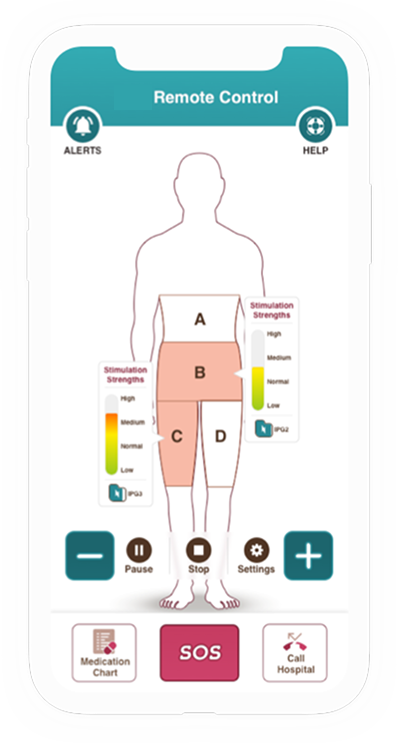
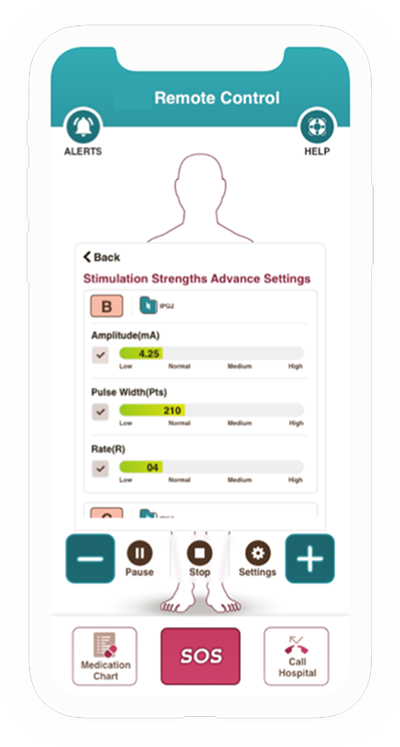
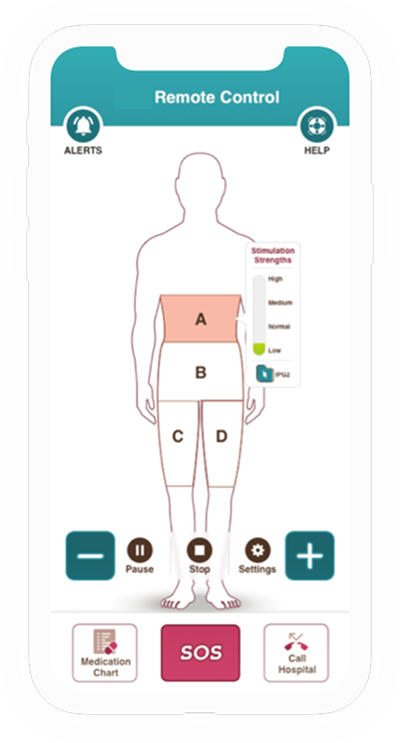
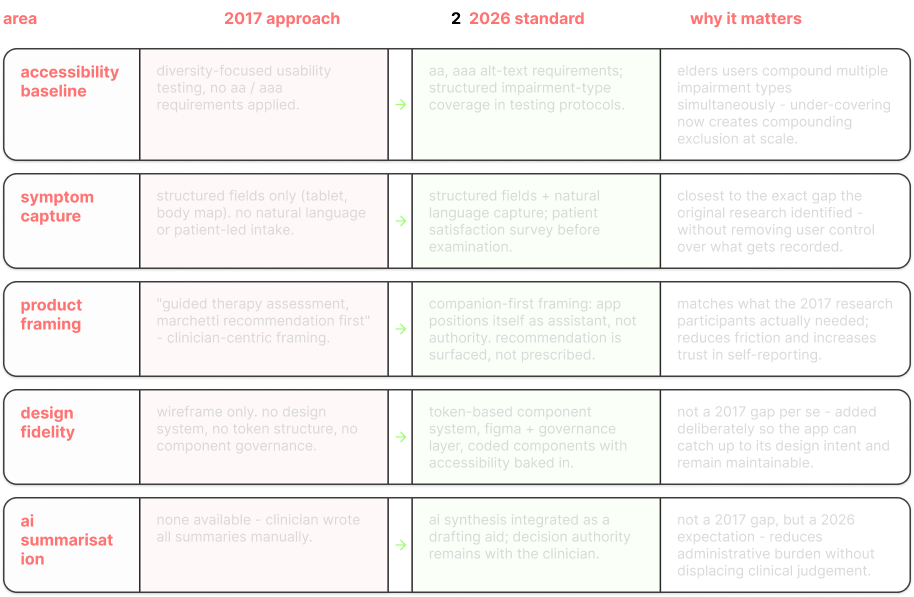
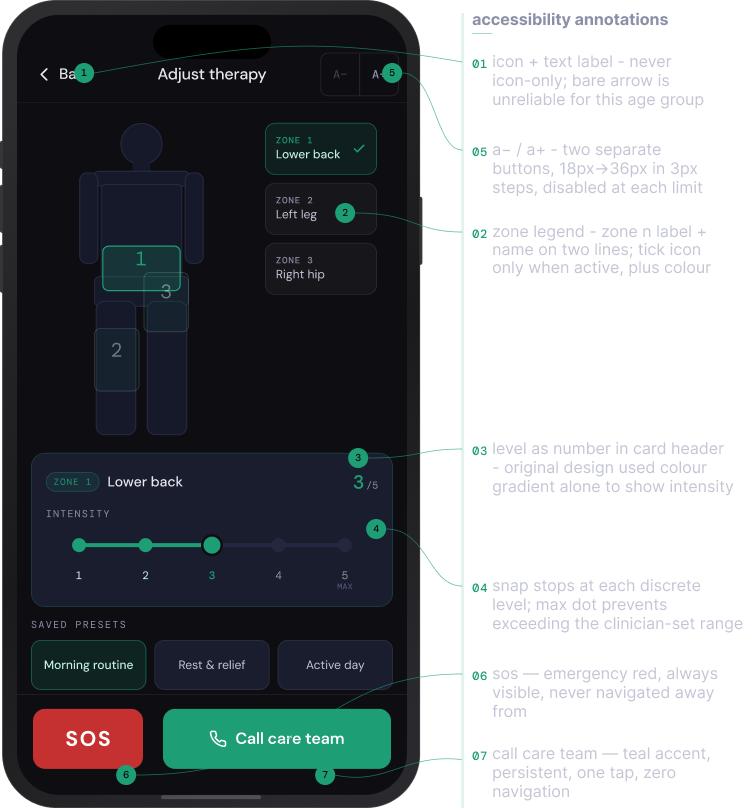
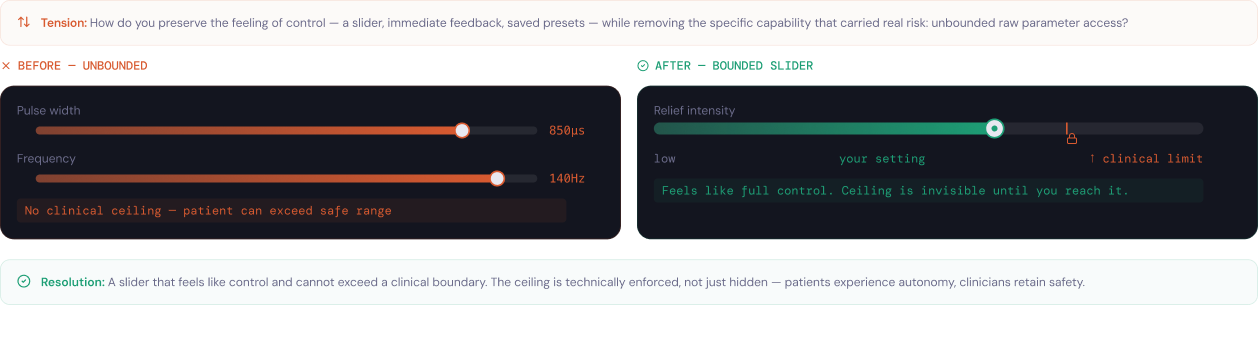
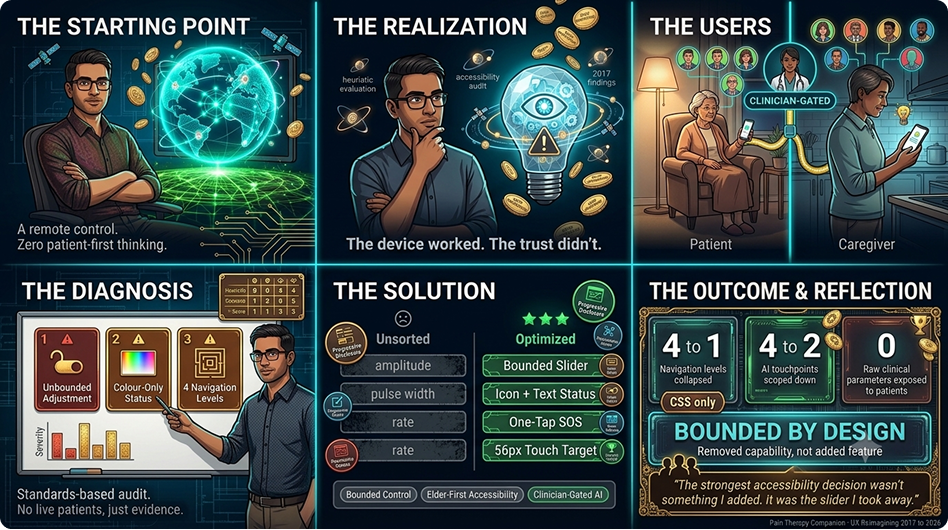
the 2017 brief was solved as a literal remote control: adjust, save, done. yet its own research found the most-used feature was reaching a clinician, not adjusting therapy. the real gap is everything around the control: elderly patients struggle to translate a lived, inconsistent sensation into something a clinician can act on, and a device this personal, used daily by an ageing population, could no longer treat accessibility as optional.
my mandate
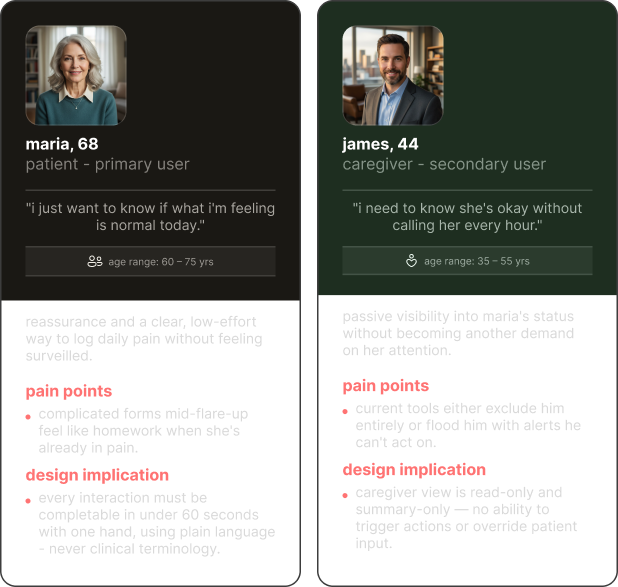
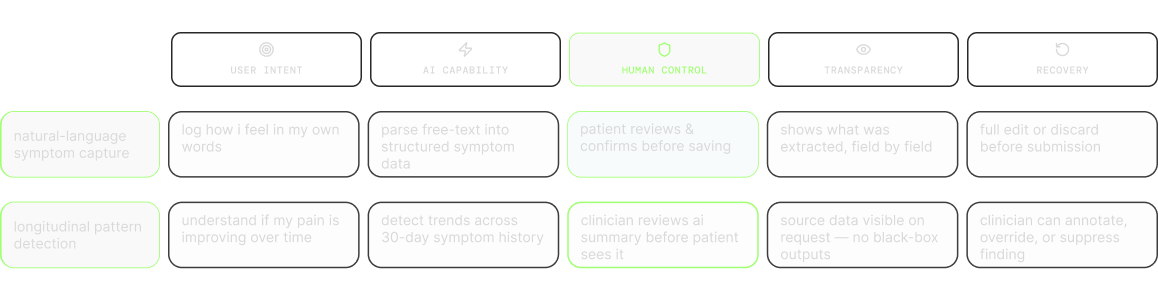
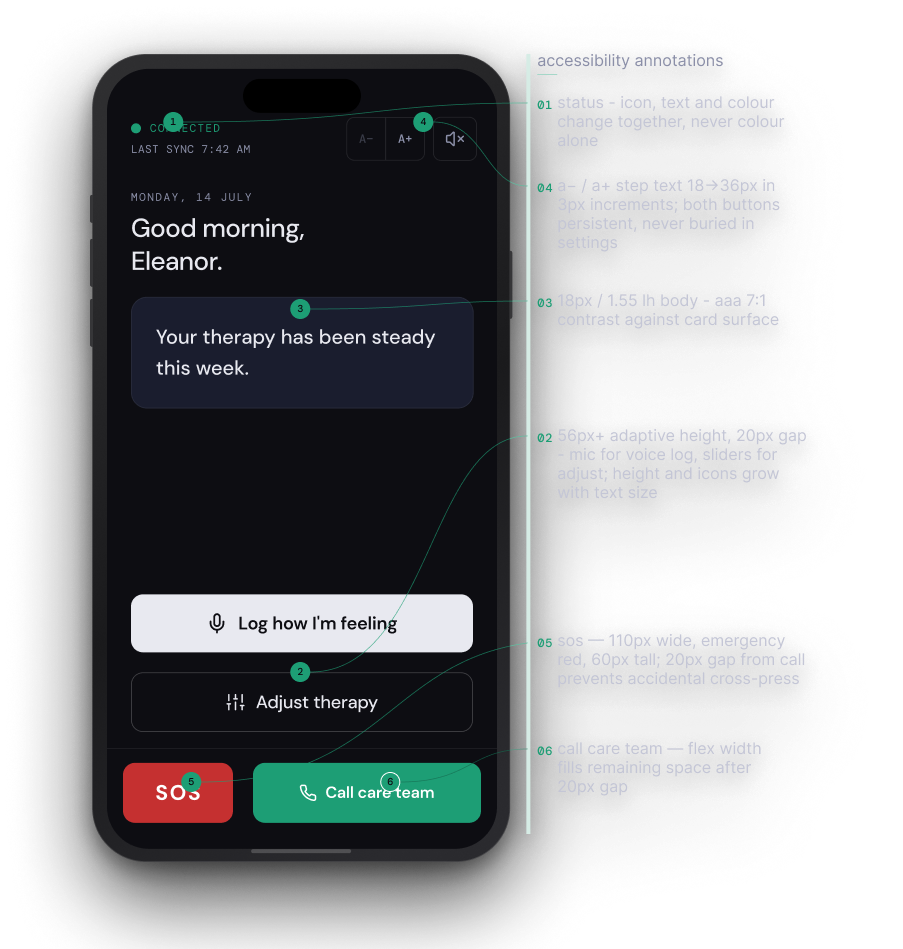
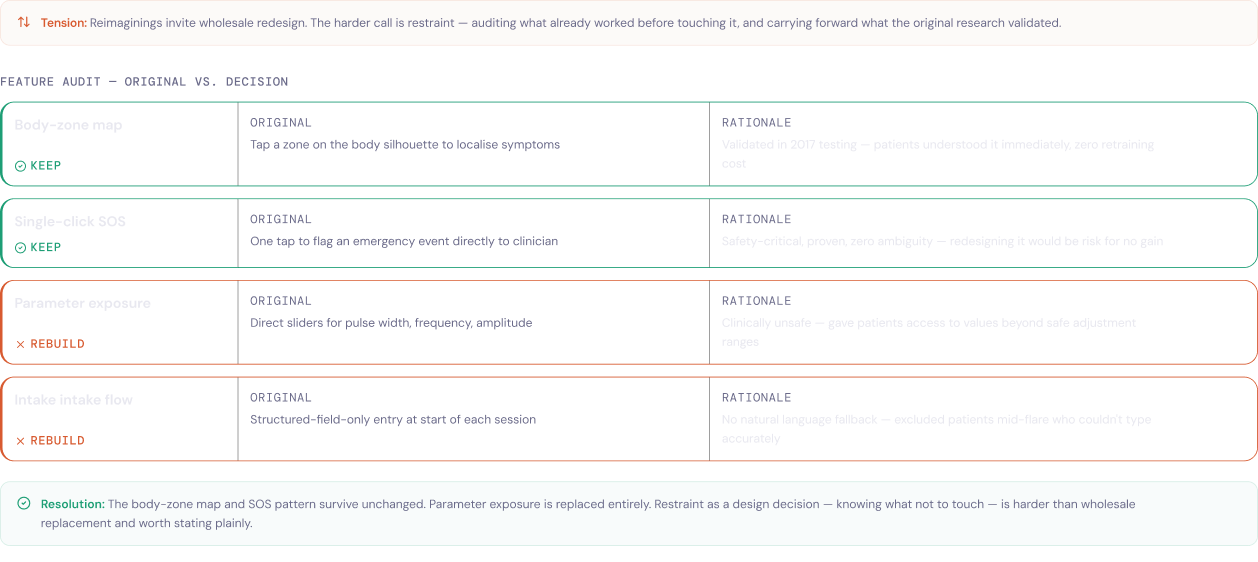
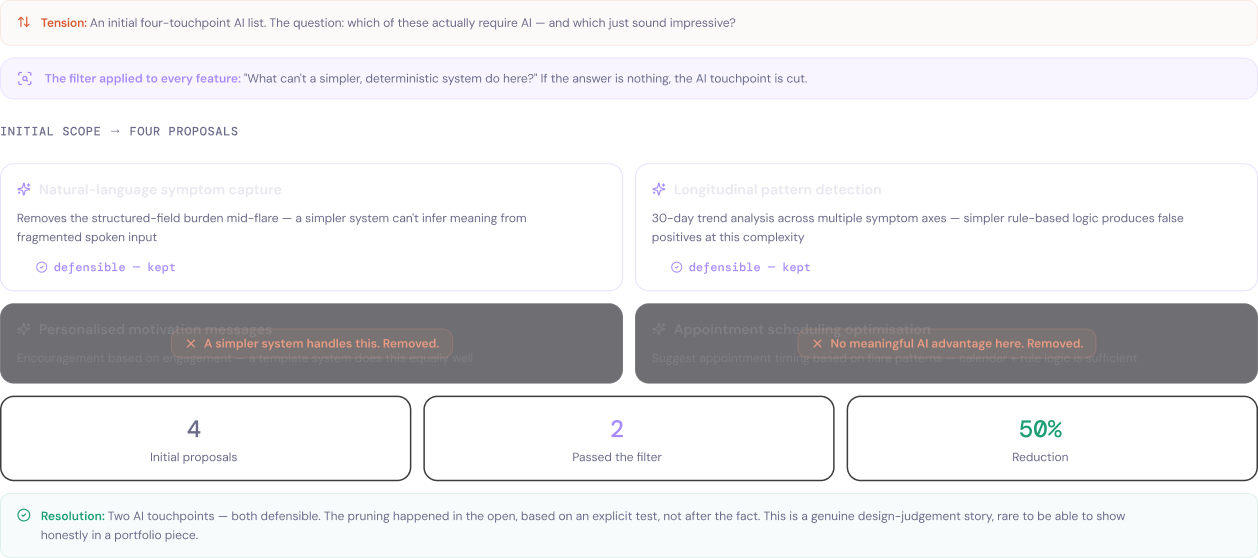
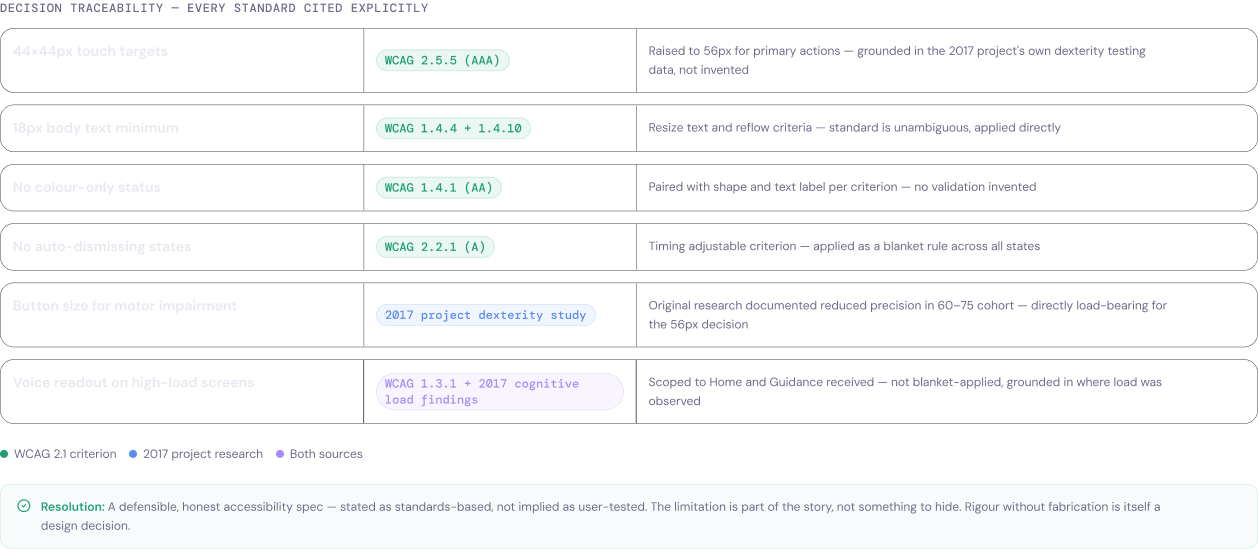
sole ux/ui architect for the reimagining exercise, 2026. i reframed the brief from remote control to guided therapy companion, ran a heuristic gap analysis against the 2017 design, defined the accessibility strategy end to end, scoped the ai-assisted capabilities against a strict human-control standard, and designed the patient and caregiver flows.
outcome
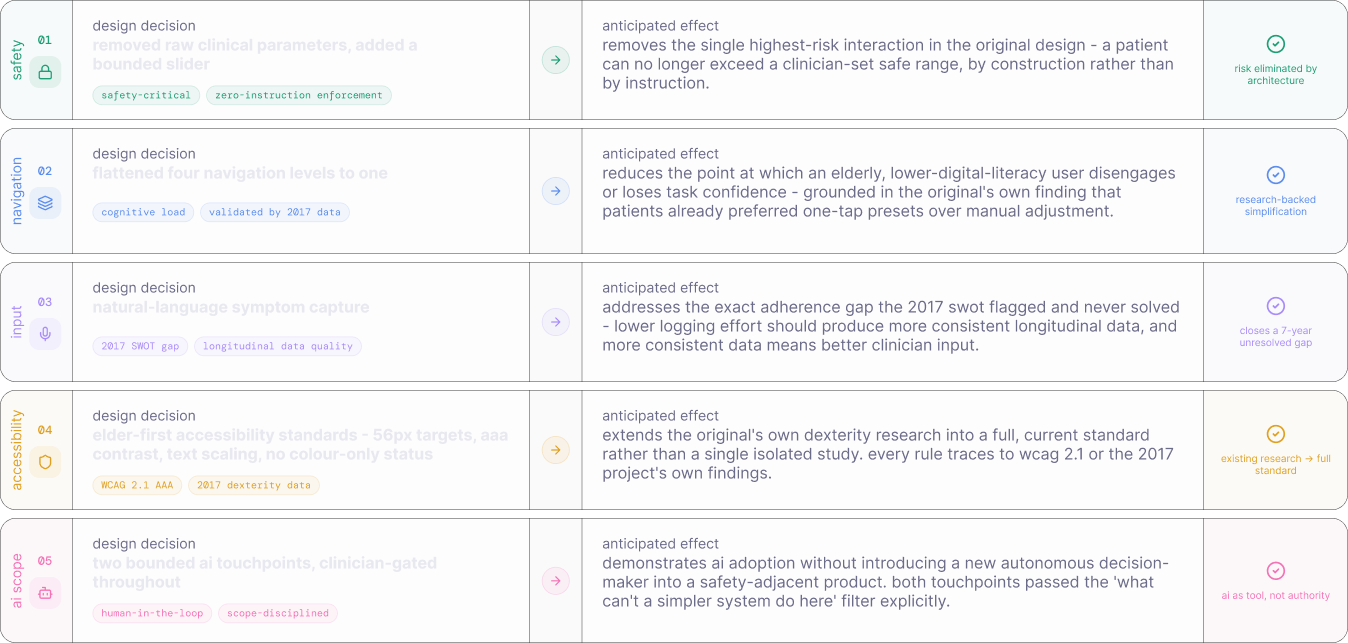
a clickable figma prototype of the patient and caregiver experience, a standards-traced accessibility approach and a bounded ai framework. no usability data exists for this reimagining; it is speculative, not shipped, and no measured outcomes are claimed. what each decision was built to produce is stated as anticipated impact further down.
reflection
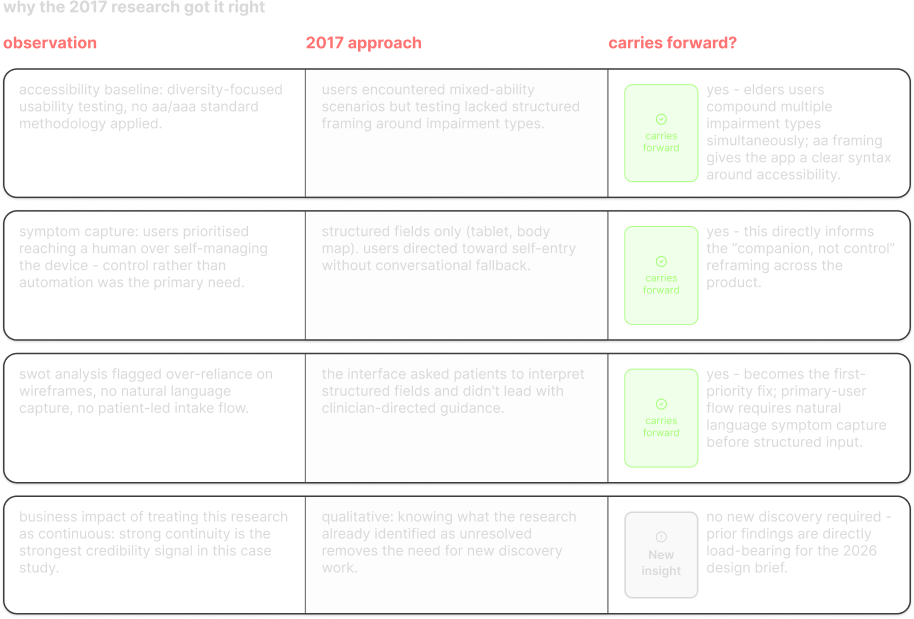
this set out to answer a narrower question than "how would this look today": what did the 2017 research already know and never get to build? most of the work was subtraction. restraint reads quieter than a new feature, but for people managing chronic pain through an implanted device, quieter is the whole point.