context
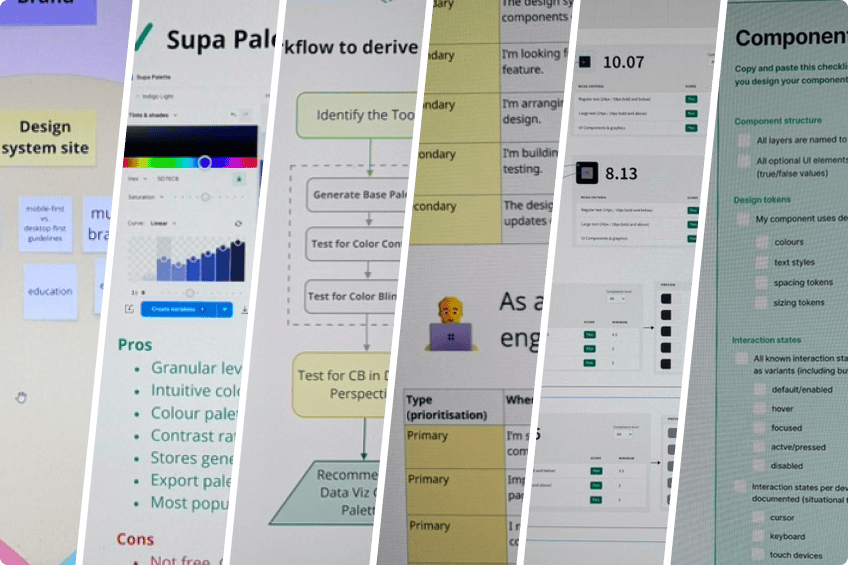
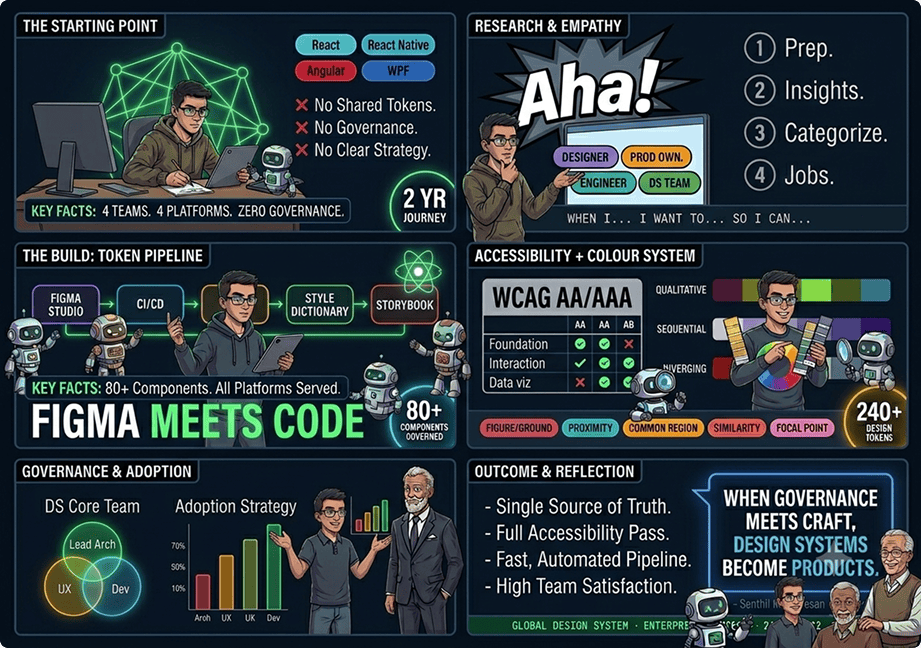
a global design system for computershare, a financial services firm, serving four enterprise product teams across four platforms, with designers and front-end engineers working from one source of truth in figma libraries, coded components and zeroheight documentation.
problem
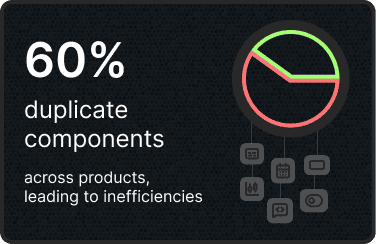
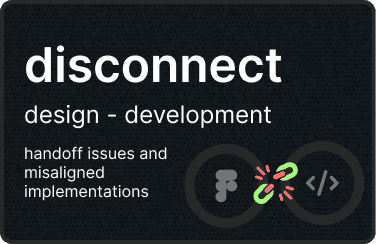
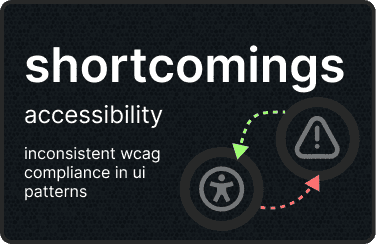
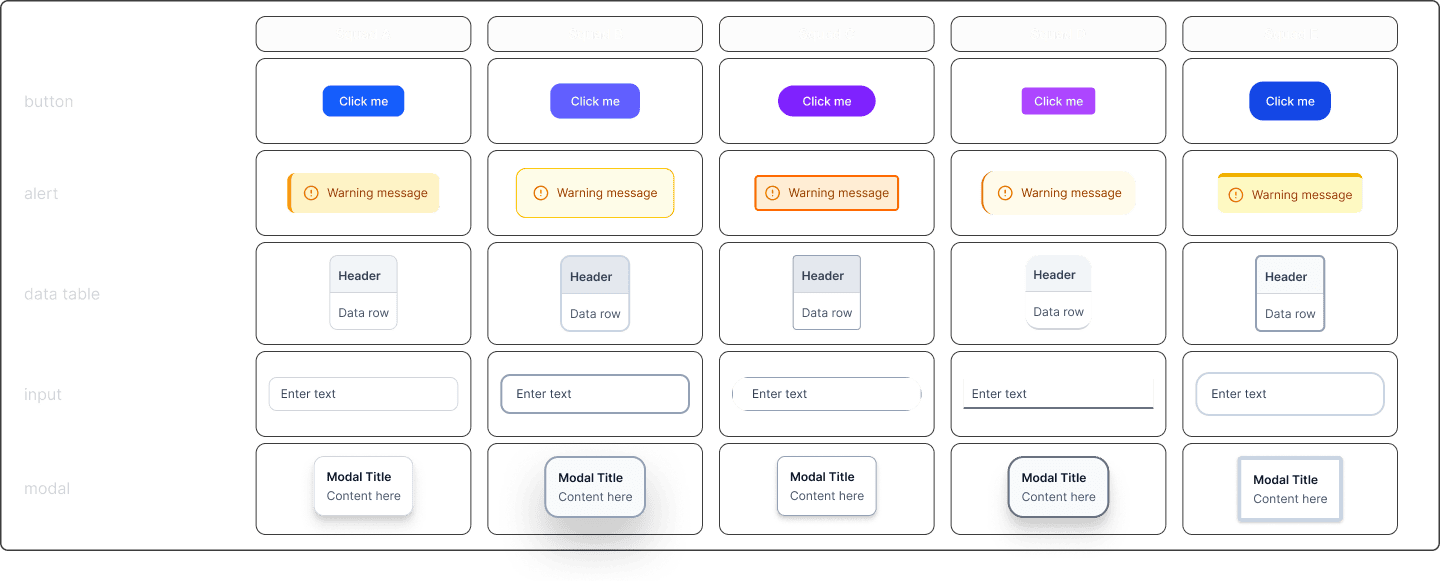
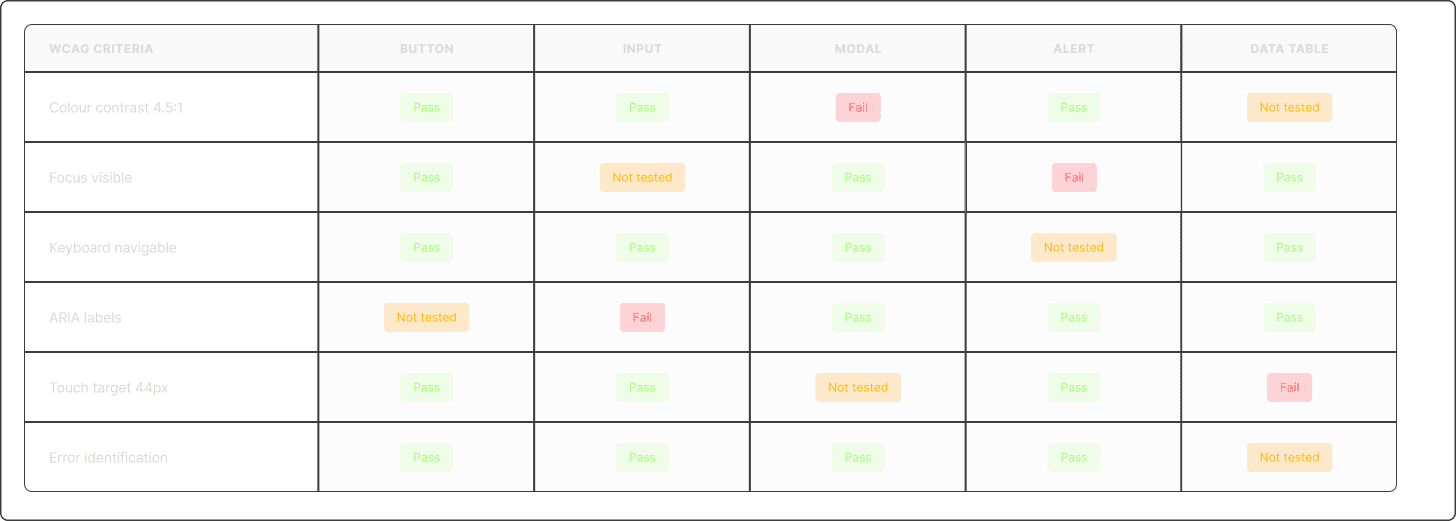
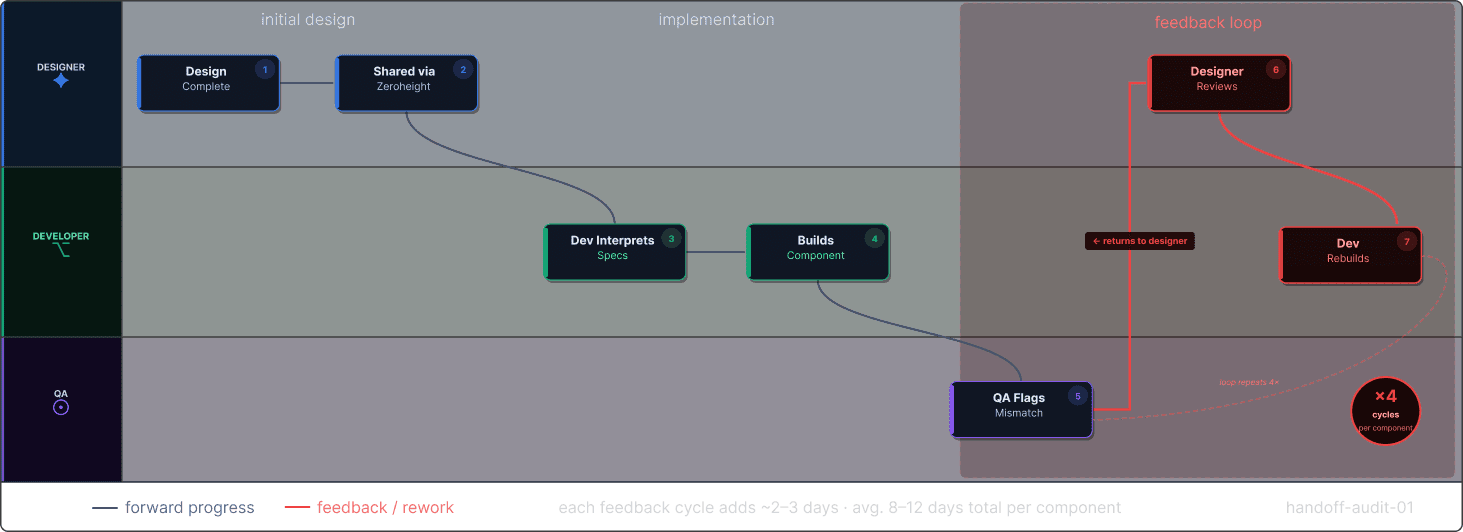
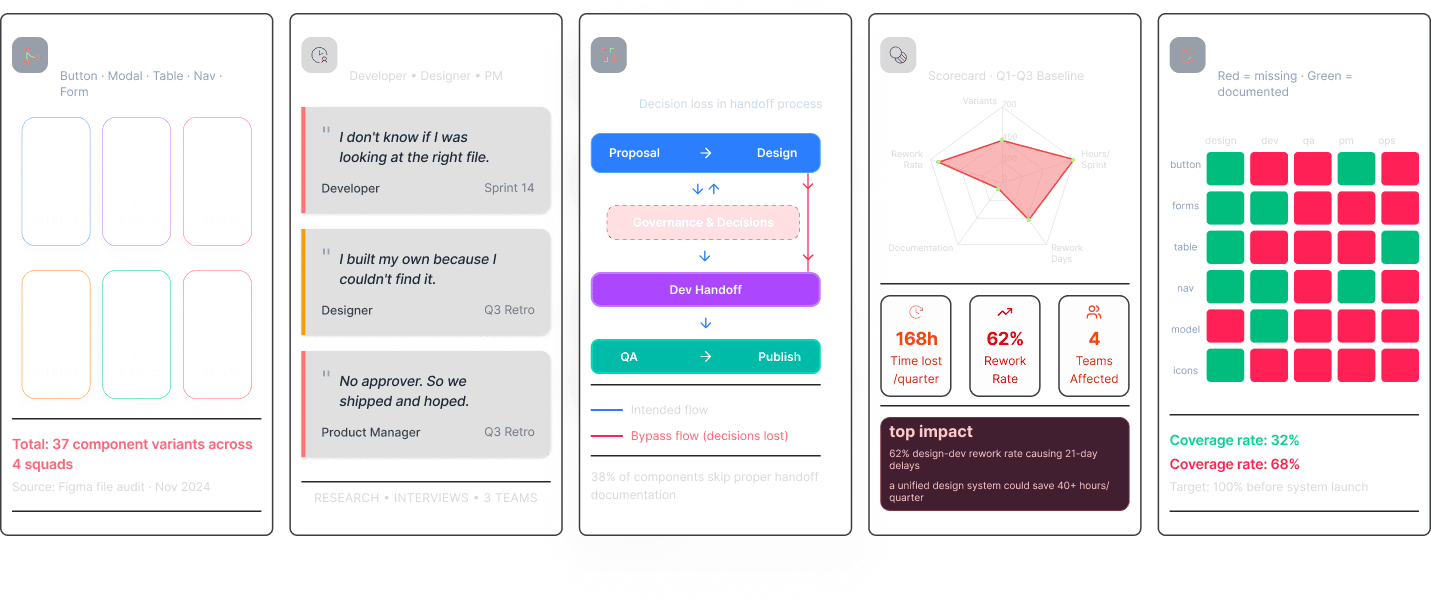
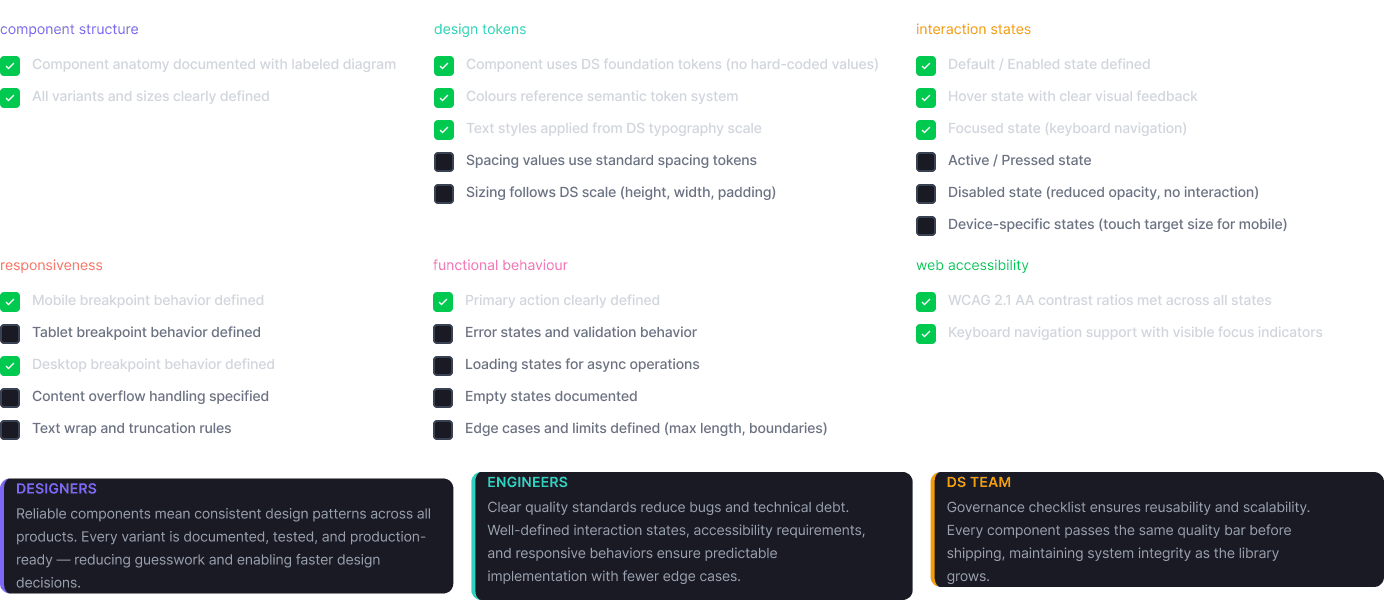
teams were building the same components independently (an audit found 50 to 60% duplication), handoff took four back-and-forth cycles per component, and accessibility was checked occasionally rather than at component level. without a shared system, both the user experience and delivery speed were declining.
my mandate
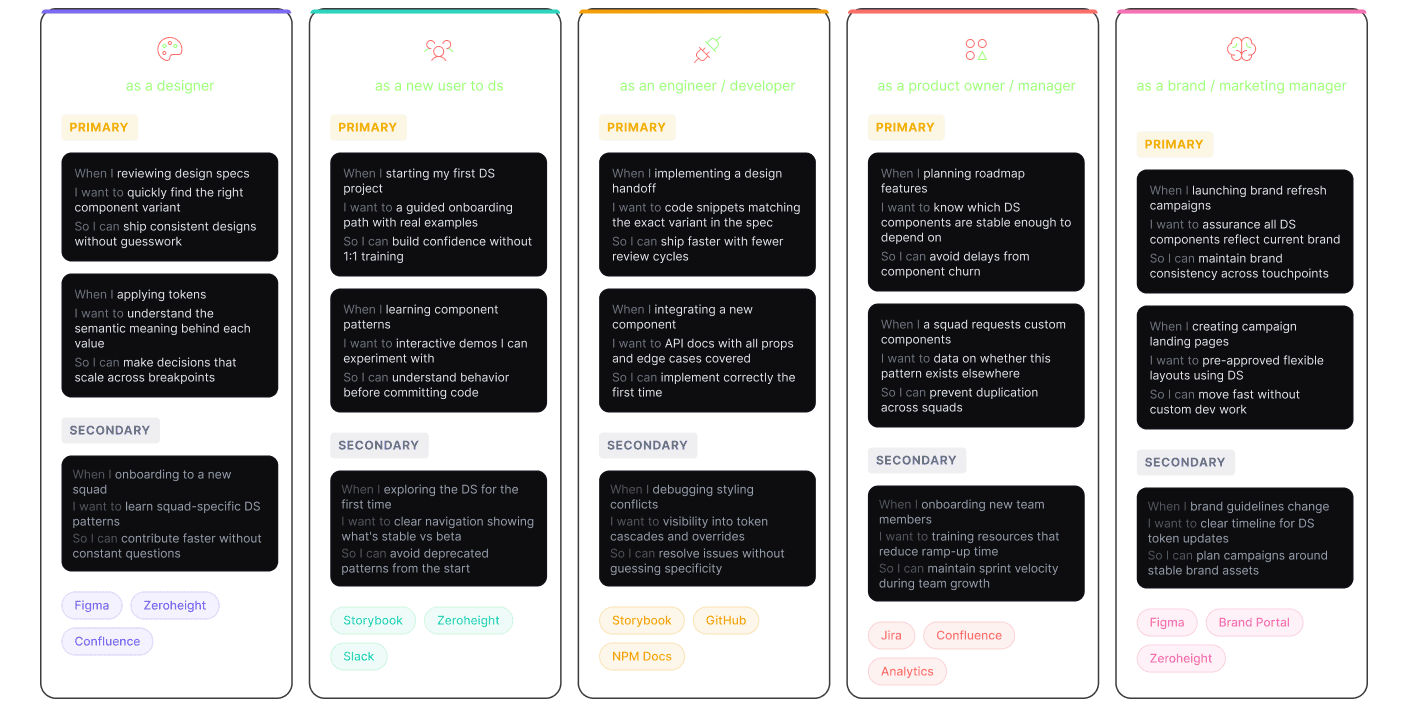
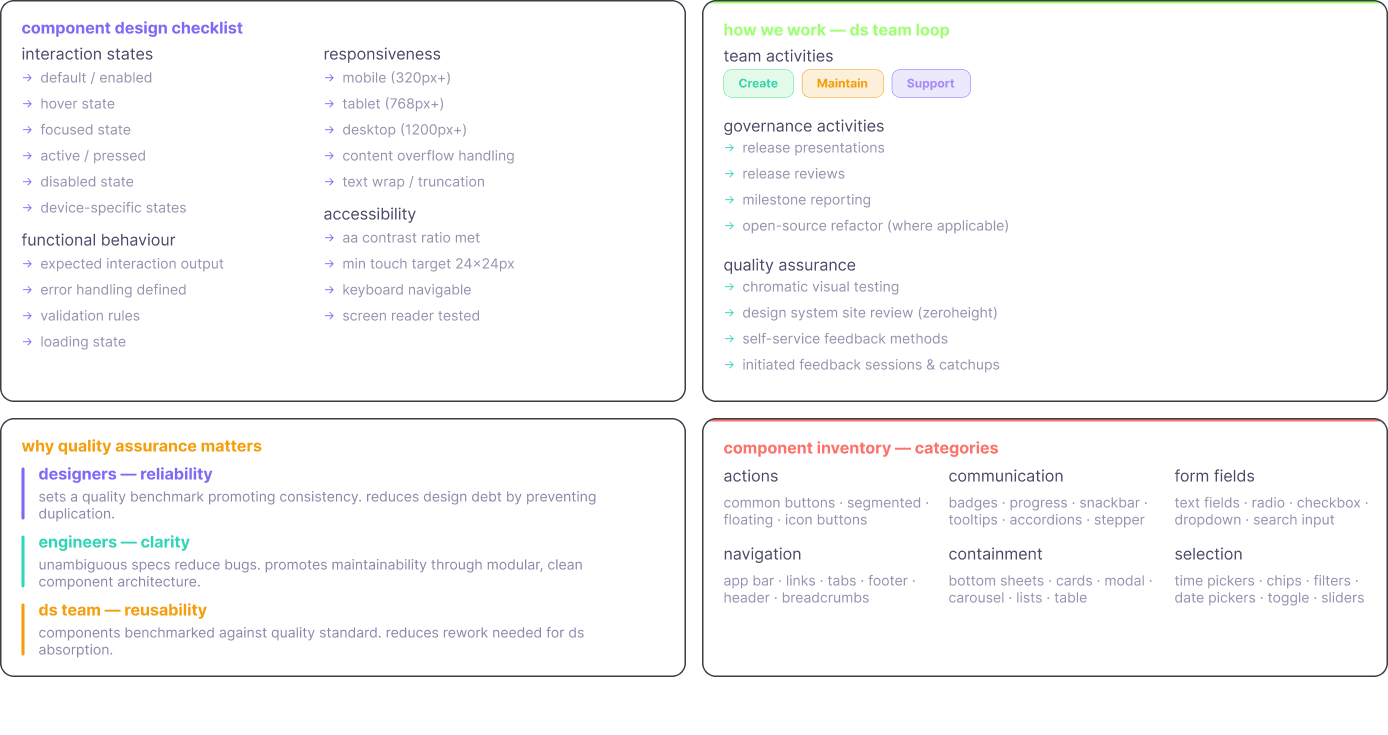
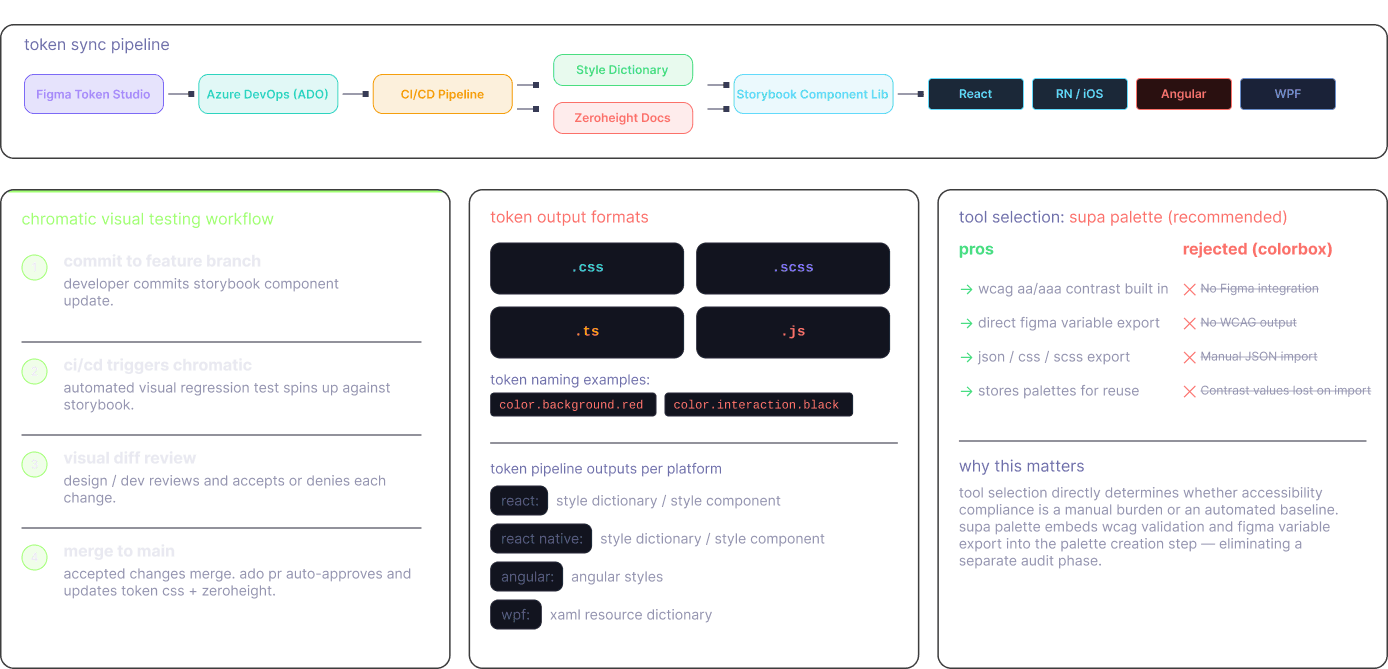
design system lead, july 2024 to may 2025. i set the system's direction, foundations and governance, defined its token architecture and component model, established storybook and zeroheight as the coded and documented sources of truth, and led the design-to-code ci/cd workflow with engineering. i worked with product owners, designers and front-end engineers across the four teams, in agile delivery across time zones.
outcome
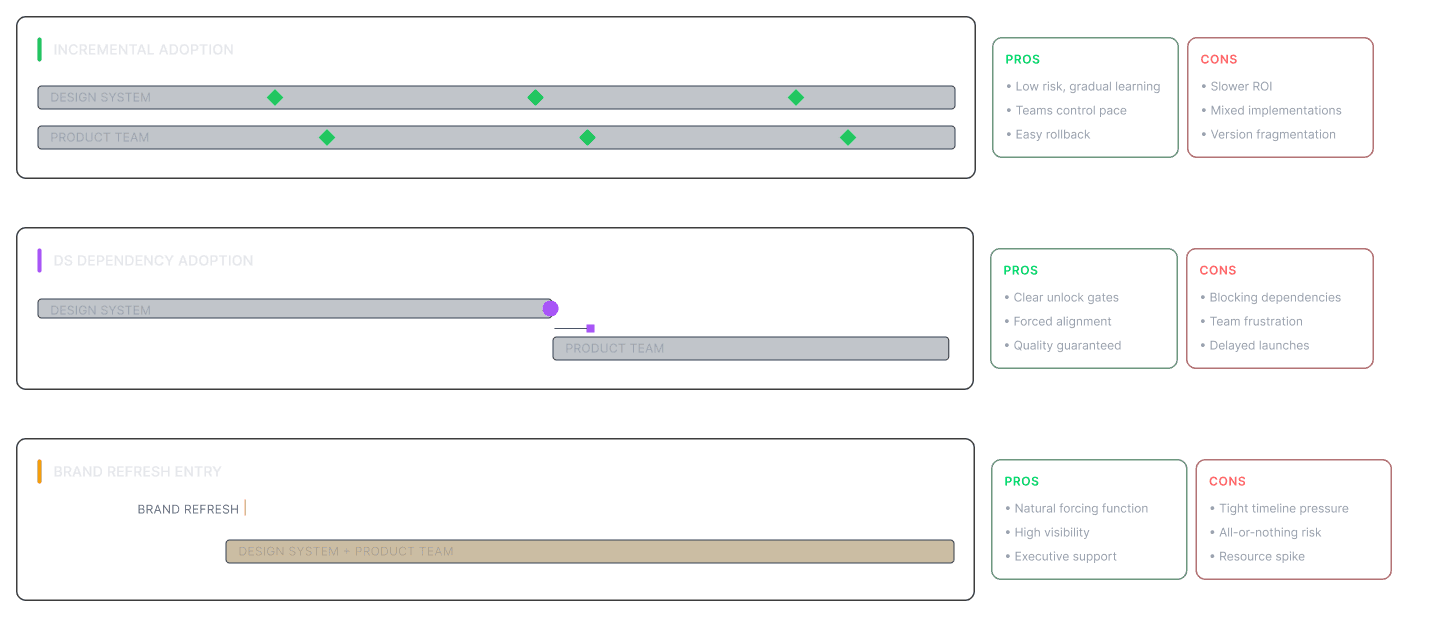
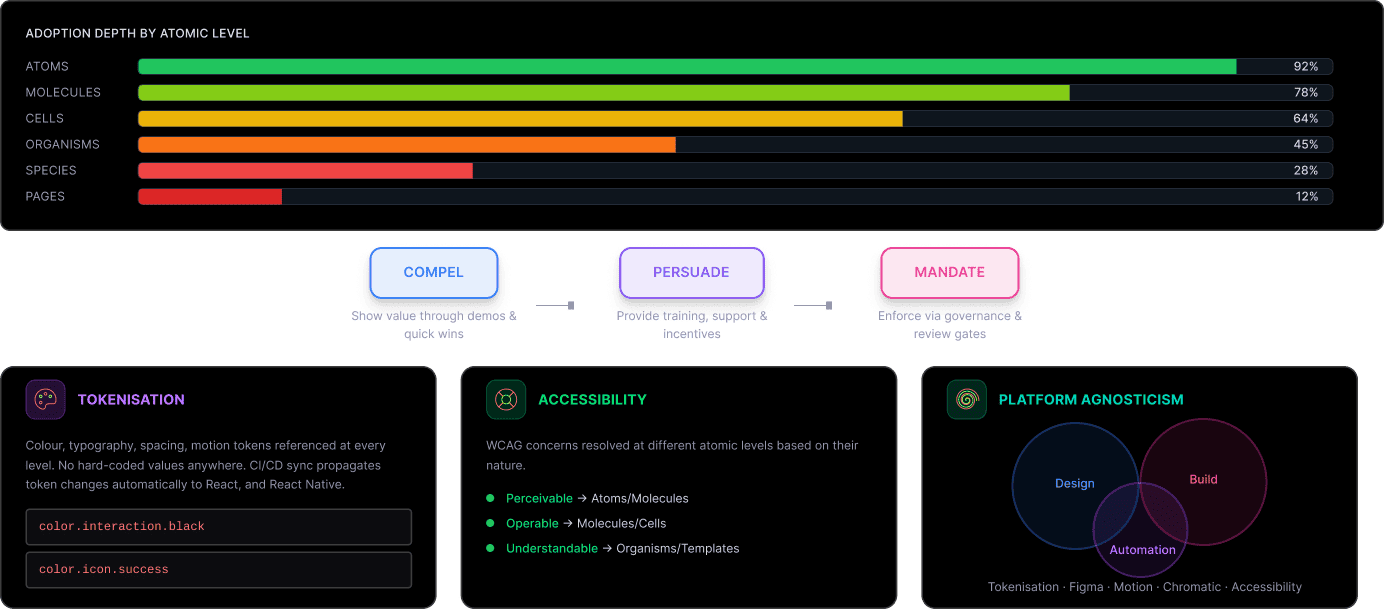
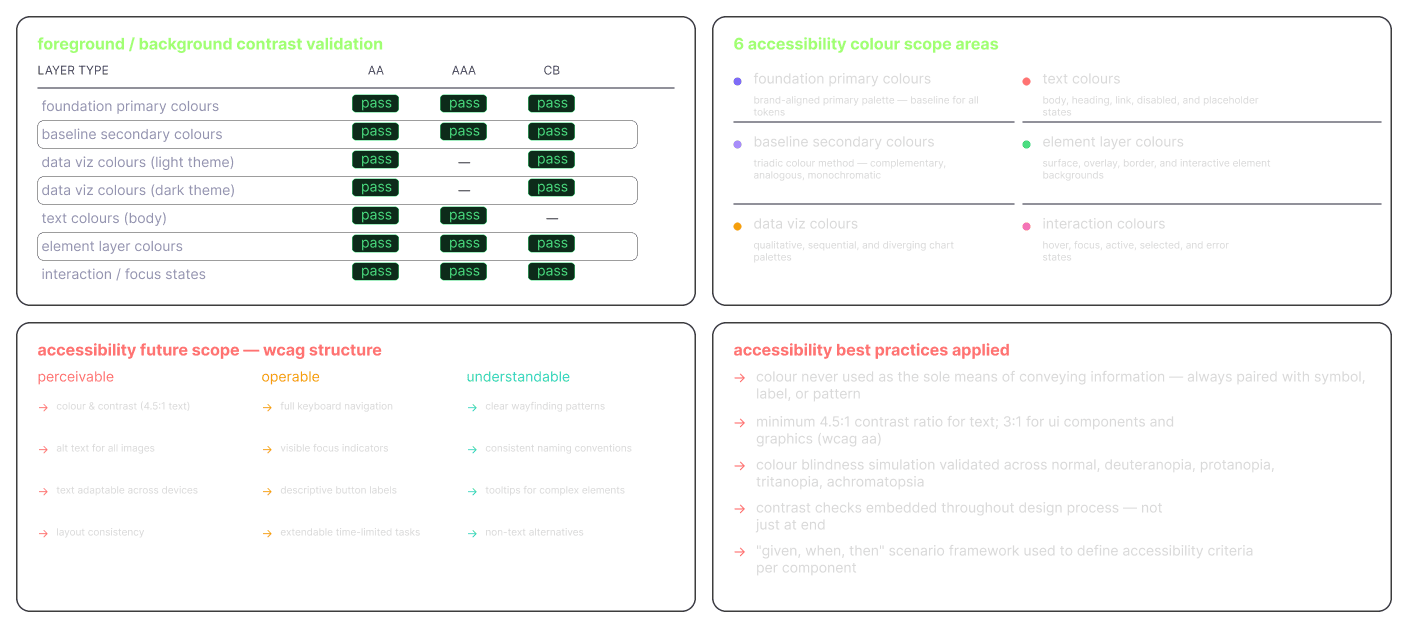
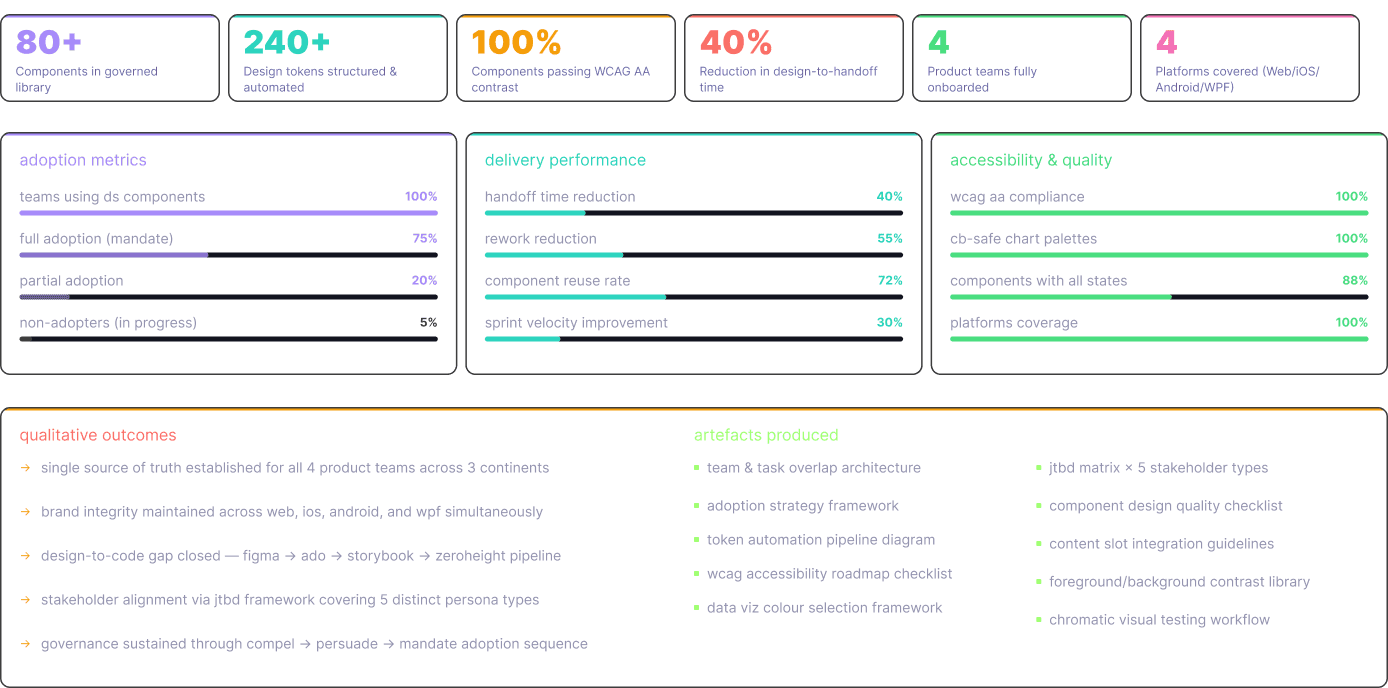
from zero infrastructure to a governed, multi-platform system: 80+ components and 240+ tokens, adopted by four product teams across four platforms, all components meeting wcag aa, and design-to-development handoff time down 40%.
measured in q2 2025: adoption analysis of team usage, rework reduction and design-to-code handoff across all product squads.
reflection
a design system for a global enterprise is a systems problem, not a design problem: brand, code, governance and human behaviour have to reach the same conclusion at the same time. the hardest part was never the component; it was the shared understanding of what it is for, who owns it and what happens when it breaks.